
Smart Business Cards in Saudi Arabia: The Direct Replacement for Paper Cards

Smart Business Cards in Saudi Arabia: A Complete Buyer’s Guide (2026)
The paper business card has not changed in over a hundred years. You print a box of 500, hand out maybe 60, and the rest sit in a drawer until your phone number changes and you print another box.
Smart Business Cards exist to end that cycle. One card, tapped on a phone, shares your details instantly. Nothing to reprint when something changes.
This guide covers what they are, how they work, what to check before you buy one in Saudi Arabia, and what they cost. It is written for anyone comparing options, not for a specific brand.
Quick answer: A Smart Business Card is a physical card with an NFC chip inside. Tap it on a phone and your contact details are shared in one motion. No app needed on either side. Prices in Saudi Arabia typically run from around SAR 100 for standard cards to SAR 200 and up for metal editions.
What Is a Smart Business Card?
A Smart Business Card is the direct successor to the paper business card. It is the same size and shape, but it carries a small NFC chip inside.
When someone taps it on the back of their phone, your contact details are shared instantly.
No app to install. No code to scan. Just tap.
The core idea is simple. One card replaces every paper card you will ever print. When your job title, phone number, or company changes, you update the card digitally instead of ordering a new batch.
How Smart Business Cards Work
The technology sits inside the card itself. Here is the full process:
You hold your card to the top of another person’s phone.
The phone reads the NFC chip inside the card.
Your contact details appear, ready to save.
That is the whole experience. It works on most modern iPhones and Android phones with no setup on the other person’s side.
The One Thing Most Buyers Miss: Tap to Save vs Tap to Browse
This is where Smart Business Cards differ from each other, and it is the single most important thing to check before you buy.
Most Smart Business Cards open a web profile page when tapped. The other person lands on a page, looks around, has to find the right button, and then saves your details from there. That is three extra steps, and people drop off at every one.
Some cards skip the page entirely. Tap the card and the phone immediately offers to save the contact. It lands in the address book in one motion.
The difference sounds small. It is not. Every extra step between the tap and the saved contact is a step where the other person gets distracted, gets pulled into a conversation, or simply puts their phone away. The whole point of the card is that the contact gets saved. A design that adds steps works against its own purpose.
When comparing providers, ask one question: does a tap save the contact, or does it open a page first?
Smart Business Cards and Saudi Arabia’s Digital Shift
Saudi Arabia is moving faster toward digital-first business than almost anywhere in the region. Vision 2030 has pushed digital transformation from a nice-to-have into a default expectation across both government and private sector.
That shift shows up in small ways. Payments moved to Mada and Apple Pay. Invoicing moved to ZATCA e-invoicing. Government services moved to Absher and Nafath.
The paper business card is one of the last analogue habits left in an otherwise digital workflow.
This is part of why Smart Business Cards have picked up quickly in Riyadh and Jeddah, and why they show up at events like LEAP, the Kingdom’s largest technology exhibition. When the rest of your business runs digitally, handing over a printed card starts to feel out of step.
Why Saudi Businesses Are Making the Switch
Cost Efficiency
Paper cards are a recurring cost. Every reprint costs money, and every change to a phone number or job title forces another print run.
A Smart Business Card is bought once and updated digitally. Over a year, a team of ten can save more on reprints than the cards cost in the first place.
Less Time Lost on Admin
For a small business owner, time spent reordering cards and waiting on print jobs is time taken from the work that matters.
Running a company is hard enough. A card that updates itself removes one recurring headache from the list.
A Stronger First Impression
Tapping a card to share details still gets a reaction. It signals that your business is current and pays attention to detail.
In sectors built on face-to-face meetings, that impression carries real weight.
Nothing Out of Date
No handing over an old card with a crossed-out number. No apologising for a stale title.
One tap, and your information is correct every single time.
Smart Business Cards vs Paper Business Cards
Paper Business CardSmart Business CardCost over timeRecurring, every reprintOne-time purchaseUpdating detailsRequires a full reprintUpdated digitally, card unchangedContact saved to phoneManual typing, often never doneSaved on tapRuns outYes, constantlyNoWorks without an appYesYesEnvironmental wasteHigh, most are discardedMinimalFirst impressionStandardMemorable
Types of Smart Business Cards
Cards generally come in two materials, and the choice is mostly about brand fit.
Standard PVC cards are the same weight and feel as a normal card. They are the practical choice for teams and for anyone handing out cards frequently. Typical price in Saudi Arabia: around SAR 100.
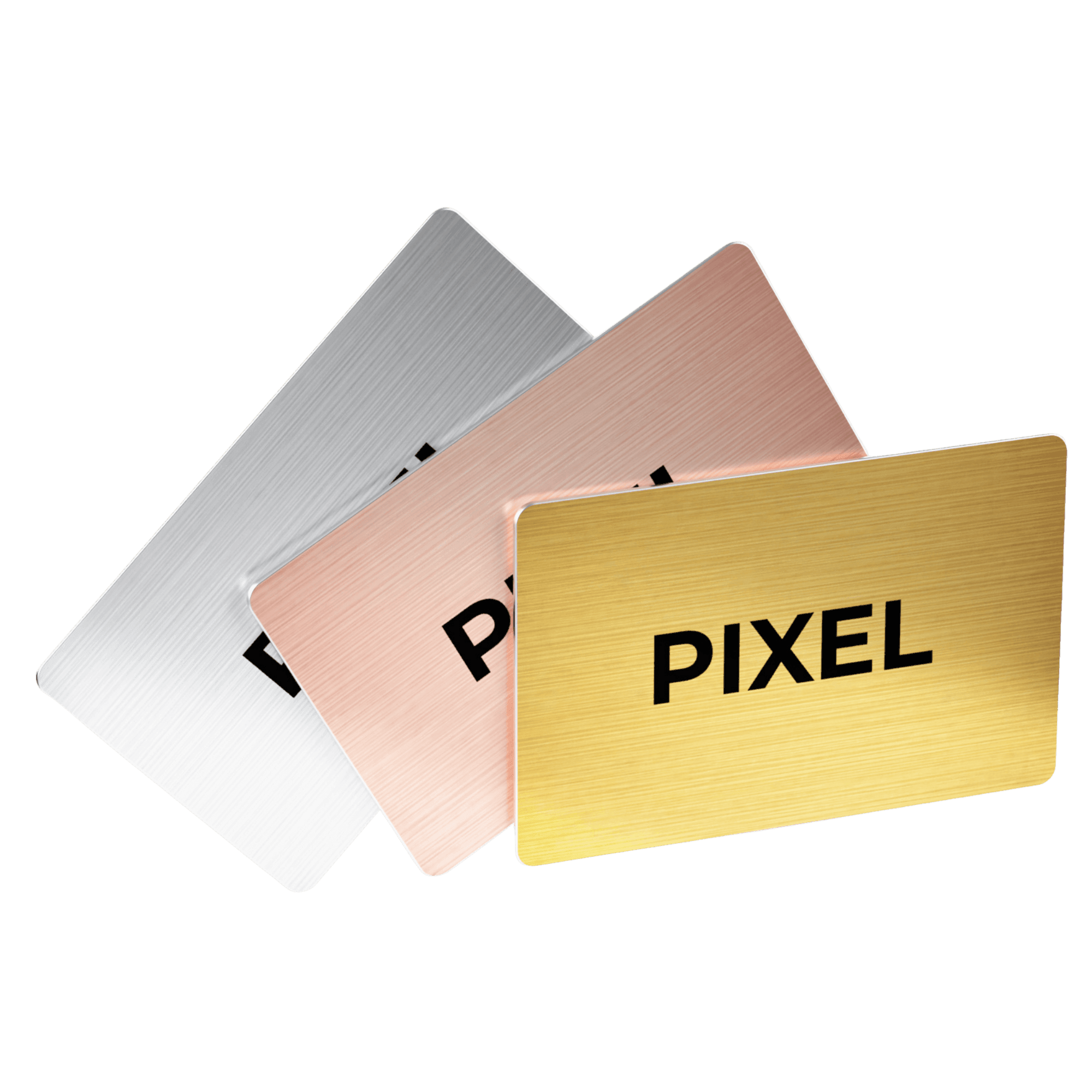
Metal cards have real weight to them and make a noticeably stronger impression when handed over. They suit senior roles, luxury brands, and anyone whose card is part of the pitch. Typical price: around SAR 200 and up.
Both work identically. The chip is the same. The difference is entirely in feel and presentation.
Smart Business Card Prices in Saudi Arabia
Pricing across the Saudi market generally falls into these bands:
Standard cards: roughly SAR 100 to SAR 180
Metal cards: roughly SAR 200 to SAR 300
Custom logo and design: usually SAR 30 or so on top, sometimes included for teams
Team orders: most providers discount at 5 or more cards
Optional subscriptions: some providers charge monthly or yearly for extra features
Watch for two things. First, whether VAT is included in the listed price, since B2C pricing in Saudi Arabia is normally VAT-inclusive at 15 percent. Second, whether the basic function of the card requires an ongoing subscription, or whether the card works permanently after purchase.
Who Should Use a Smart Business Card?
The honest answer: anyone who currently hands out a paper business card.
That is not a sales line. It is the actual scope. Smart Business Cards were built to replace paper cards, so wherever paper cards are used, they apply.
Businesses that tend to see the fastest benefit:
Owner-run companies and small teams
Clinics and healthcare practices
Real estate agencies
Marketing and design agencies
Insurance and brokerage firms
Law and accounting firms
Car dealerships
Hospitality and event teams
Consultants and freelancers
These are all sectors where people meet face to face constantly and where the impression you leave directly supports the business.
What to Check Before You Buy
A short checklist for comparing providers in Saudi Arabia:
1. Does a tap save the contact directly, or open a page first? The single biggest difference between products. Direct save loses fewer contacts.
2. Is the provider registered in Saudi Arabia? A locally registered company means proper VAT invoicing, easier support, and no cross-border shipping delays.
3. Is the card permanent, or does it stop working without a subscription? Some providers make the core function subscription-dependent. Check this before you buy.
4. What happens to your data? Ask what the provider stores and who can see it. A card that shares your details should not also be broadcasting them.
5. Is custom design included? Your logo on the card matters. Confirm whether design is a paid add-on.
6. Are there team options? If you are buying for a group, look for volume pricing and a way to update everyone’s cards centrally.
7. What is the delivery time inside the Kingdom? Local providers typically ship within days. Overseas ones can take weeks.
Frequently Asked Questions
Do Smart Business Cards need an app?
No. The person receiving your details needs no app at all. They tap the card to their phone and save the contact. You may use an app or web portal to update your own details, but the person on the other side never needs anything.
Do Smart Business Cards work on all phones?
They work on nearly all modern iPhones and Android phones. NFC is standard on almost every phone sold in the last several years. iPhones from the XR onward and most Android phones from the last five years support it without any setup.
What happens when my details change?
You update your details digitally. The physical card stays exactly the same. Nothing is reprinted and nothing is thrown away.
Are Smart Business Cards secure?
It depends entirely on the provider. A well-designed card shares only the details you choose to share. The important question is what the provider stores about your taps and who can access it. Ask before you buy.
How much does a Smart Business Card cost in Saudi Arabia?
Standard cards generally run around SAR 100, and metal cards around SAR 200. Custom design is sometimes included and sometimes charged separately. Team orders are usually discounted.
Can I get Smart Business Cards for my whole team?
Yes. Most providers offer team options with shared branding, volume pricing, and central management so an entire company can move off paper at once.
Do Smart Business Cards work outside Saudi Arabia?
Yes. NFC is a global standard, so the card works on any compatible phone anywhere in the world. This matters for teams travelling to Dubai, London, or anywhere else for business.
How long do Smart Business Cards last?
The NFC chip has no battery and no moving parts. A PVC card lasts as long as any plastic card in your wallet. A metal card lasts effectively indefinitely.
The Bottom Line
Smart Business Cards are not a gadget or a novelty. They are the practical replacement for a tool that stopped keeping up with how business actually works.
One card. Always current. Shared in a single tap.
For most businesses in Saudi Arabia, the question is no longer whether to switch. It is when, and which card to pick.
The two things worth getting right: choose a card that saves the contact on tap rather than opening a page, and buy from a provider registered in the Kingdom so support and invoicing are straightforward.
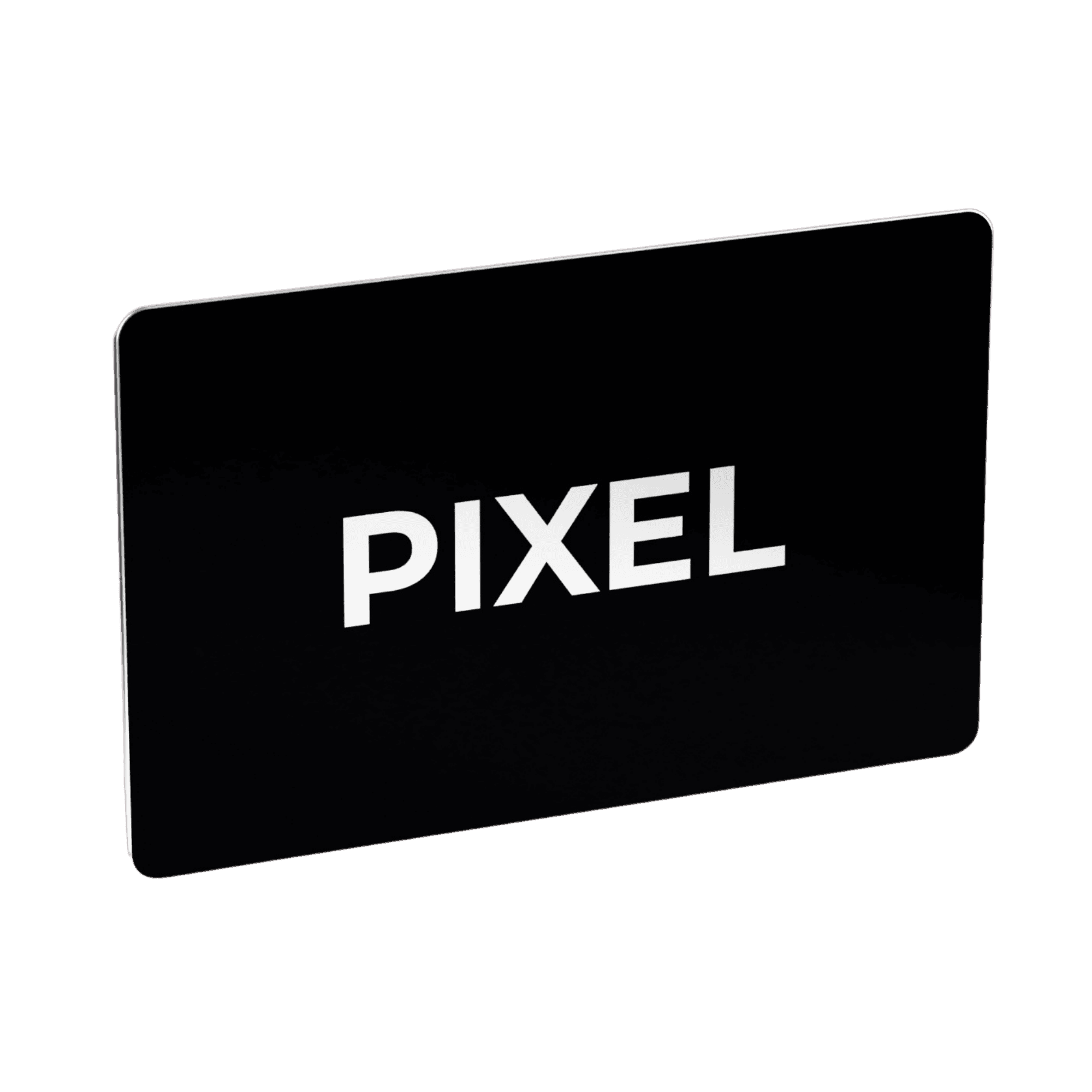
PIXEL makes Smart Business Cards in Riyadh, in both standard and metal editions. A tap saves the contact directly, with no profile page in between. See the cards.
Table of contents
- How Smart Business Cards Work
- The One Thing Most Buyers Miss: Tap to Save vs Tap to Browse
- Smart Business Cards and Saudi Arabia’s Digital Shift
- Why Saudi Businesses Are Making the Switch
- Cost Efficiency
- Less Time Lost on Admin
- A Stronger First Impression
- Nothing Out of Date
- Smart Business Cards vs Paper Business Cards
- Types of Smart Business Cards
- Smart Business Card Prices in Saudi Arabia
- Who Should Use a Smart Business Card?
- What to Check Before You Buy
- Frequently Asked Questions
- Do Smart Business Cards need an app?
- Do Smart Business Cards work on all phones?
- What happens when my details change?
- Are Smart Business Cards secure?
- How much does a Smart Business Card cost in Saudi Arabia?
- Can I get Smart Business Cards for my whole team?
- Do Smart Business Cards work outside Saudi Arabia?
- How long do Smart Business Cards last?
- The Bottom Line


