
Smart Business Cards for Insurance Agents in Saudi Arabia

Why do insurance agents and brokers in Saudi Arabia still need a business card?
Insurance is sold on trust, and trust starts with knowing exactly who you are dealing with. Before choosing a smart business card for insurance agents, look at when the card is actually used: a broker meeting an HR manager about the company’s medical cover, an agent visiting a business owner about motor or property insurance, a relationship manager at a networking event, or a referral from a happy client. Each meeting ends with the same need: the client should save your details, and know straight away which licensed company you represent.
In Saudi Arabia that second part is written into the rules. The Insurance Intermediaries Regulation asks insurance agents to note their licence number, and the name of the insurance company they represent, on all official papers, correspondence and documents, and asks brokers to note their licence number on all papers, correspondence and documents (SAMA Rulebook, Art. 31(a) and 34(a)). A smart business card makes it easy to share your contact details, and those credentials, with one tap.
Short answer
A smart business card for insurance agents is an NFC card you tap on a client’s phone to save your contact details instantly, with no app. In Saudi Arabia, we recommend showing your company’s licence number and, for agents, the insurer you represent. For agencies and brokerages, team cards plus lead capture send every new prospect into the CRM.
Disclosure: this guide is published by PIXEL, a Riyadh company that makes smart business cards. It is general information, not legal or compliance advice; check your obligations with your compliance team and the Insurance Authority. Where PIXEL fits is explained in its own section.
Who regulates insurance agents and brokers in Saudi Arabia?
The Insurance Authority (IA) is the regulator. The Saudi Cabinet approved its creation in August 2023, and it began operating on 23 November 2023 (Clyde & Co, September 2023; U.S. International Trade Administration, January 2024). By April 2024 it had fully taken over the insurance responsibilities previously held by SAMA and the Council of Health Insurance, and the existing SAMA rules stay in force until other instructions replace them (GCC Board Directors Institute, April 2024).
The IA licenses “insurance intermediaries”, a category that covers insurance brokers, reinsurance brokers and insurance agents (Insurance Authority, Apply for Licenses). The difference matters for your card:
- An insurance agent represents an insurance company.
- An insurance broker negotiates with insurance companies on behalf of the client (SAMA Rulebook, Insurance Intermediaries Regulation, Art. 4).
Before accepting an application, the Insurance Market Code of Conduct asks providers to tell the customer whether they are an insurance company or acting on behalf of one (Art. 30(a)), and the intermediaries regulation asks them to make sure clients understand the nature of the relationship (Art. 8(i)). Your business card is often the first thing a client reads about you, so we recommend it makes that relationship clear too.
What should an insurance agent’s business card include?
Start from the basics of what to put on a business card in Saudi Arabia, then add what matters in insurance:
| Item | Why it matters in insurance |
|---|---|
| Full name (Arabic and English) | Clients will save you, and often search for you, in Arabic |
| Title and company name | Shows who you work for: insurer, agency or brokerage |
| Agent or broker | Clients should understand whether you represent an insurer or act for them (Code of Conduct Art. 30(a); Intermediaries Regulation Art. 8(i)) |
| Licence number | Required on papers, correspondence and documents for agents and brokers (Art. 31(a), 34(a)) |
| Insurer represented (agents) | Agents must name the represented insurance company on official papers and documents (Art. 31(a)) |
| Lines you handle | Medical, motor, property, SME or corporate: helps the client know when to call you (our recommendation) |
| Mobile with +966 and WhatsApp | The number clients call and save |
| Email and website | For quotations, policy documents and renewals |
Does a business card count as an “official paper” or an advertisement? The regulation doesn’t mention business cards by name. We recommend treating the card like your correspondence and showing the licence number anyway: it costs nothing and tells the client at once that they are dealing with a licensed firm. Two more points from the rules are worth checking with your compliance team before printing:
- Advertising must not be misleading or over-stated, and a broker’s advertising must not be restricted to the policies of one insurance company (Art. 35(a) and 35(b)). Keep slogans on the card factual.
- If your material refers to a specific insurer, the regulation asks for written approval from that insurance company (Art. 35(e)). If your agency wants an insurer’s name or logo on the card, check this first.
How do insurance agents use a smart business card day to day?
Vendor guides written for insurance professionals point to the same moments: networking, referrals, field visits and team-wide branding (Uniqode, updated December 2025). In Saudi practice that looks like this:
- Corporate and SME meetings. At the end of a meeting with an HR, finance or operations manager, tap your card on their phone. Your contact, title and licence details are saved before you leave the room.
- Field visits. Agents visiting shops, workshops and offices meet many people a day. A tap is faster than writing a number on a quotation.
- Renewal season. Clients come back months later. Because your details live on your profile, a client who saved you last year still reaches you even if your number or branch changed.
- Referrals. A happy client can share your saved contact with a colleague in seconds.
- Events. At networking events you meet business owners, brokers and partners. See how to network in Saudi Arabia.
- Follow-up. The same day, send the quotation or a short summary. Our guide on how to follow up after a sales meeting in Saudi Arabia has templates, and how to qualify sales leads helps decide which prospects to prioritise.
How should insurance teams handle the contact details they collect?
This is where insurance differs most from other sales teams. Client data in insurance is regulated twice: by Saudi Arabia’s Personal Data Protection Law (PDPL) like any business (DLA Piper), and by the sector’s own rules:
- Confidentiality. Intermediaries must treat all data about clients with “utmost confidentiality”, use it only for specified and lawful purposes, keep it secure and up to date, and not pass it to third parties without prior authorisation from the Saudi Central Bank, except external auditors (Intermediaries Regulation, Art. 8(g)).
- Restricted access. Client data and confidential documents must be stored safely with restricted access (Art. 49(a)).
- Data in the Kingdom. The Insurance Market Code of Conduct says customer data must be kept by the company in the Kingdom (Art. 17).
What this means for a sales team, in our view:
- Know where your leads go. Before syncing contacts from any card, app or CRM, ask the vendor where the data is stored and check it against your compliance policy. Our guide to the best CRM for small business in Saudi Arabia covers which CRMs offer Saudi hosting.
- Keep leads out of personal phones and chats where possible, so access can be controlled and removed when an agent leaves.
- Collect only what you need for the follow-up the client expects. Our guide to PDPL for sales teams in Saudi Arabia has a checklist.
How do agencies and brokerages roll out cards to a whole team?
For an agency, a brokerage or an insurer’s own sales force, the question becomes “how do we keep every rep’s details correct and see the prospects they meet”. A team rollout usually covers:
- One card per salesperson, in the company’s design, with each person’s name, title and the company’s licence details printed the same way on every card.
- Central control. An admin updates details when someone changes branch, line or title, and deactivates the card of someone who leaves.
- Lead capture only for the people who need it. Reps who collect leads get the lead capture subscription; underwriting, claims and back-office staff can simply share their details.
- CRM sync. Leads collected by reps go to the CRM, attributed to the rep who met the client. If your team still types paper cards into the CRM, see how to scan business cards into your CRM.
How to choose a smart business card as an insurance agent
- Works with any phone, no app for the client.
- Editable details, so a change of number, branch or title doesn’t mean a new card.
- Room on the design for your name in Arabic and English, your company’s logo and the licence details your compliance team wants shown.
- Lead capture if you want prospects’ details back, not just yours given away.
- Clear answers on data storage and access, to check against your sector rules.
- CRM integration if your team uses one (HubSpot, Salesforce, Dynamics 365 or similar).
- Team management: one dashboard, central edits, instant deactivation.
- Local invoicing and delivery if you buy as a Saudi company (SAR, VAT invoice).
Where PIXEL fits
A PIXEL smart business card is made in Riyadh and works on any iPhone or Android phone, with no app on either side. Teams at Gulf Insurance Group are among the companies listed as PIXEL users on pixel-nfc.com.
- Instant Save, free for life: tap the card and your name, number and email go straight into the client’s contacts. Your details live on your profile, so you can change them any time without reprinting.
- Your licence details on the card: the card is printed in full colour with your design, so your name in Arabic and English, your company’s logo and its licence number can all go on it.
- PIXEL Connect for the people who collect leads (optional subscription): your card opens a Digital Profile in your brand, invites the client to share their details back, and saves them as a lead. Paper cards can be scanned in the app, and an in-app QR covers the day you forget your card. The card itself has no printed QR: it works by tap.
- For agencies, brokerages and insurers: custom design for the whole team, one dashboard for views, leads and conversion, central edits, card deactivation, and leads collected with Connect sent to HubSpot, Salesforce or Dynamics 365.
- Dual-Layer Security: each tap opens a one-time link, so your details can’t be forwarded or reopened later.
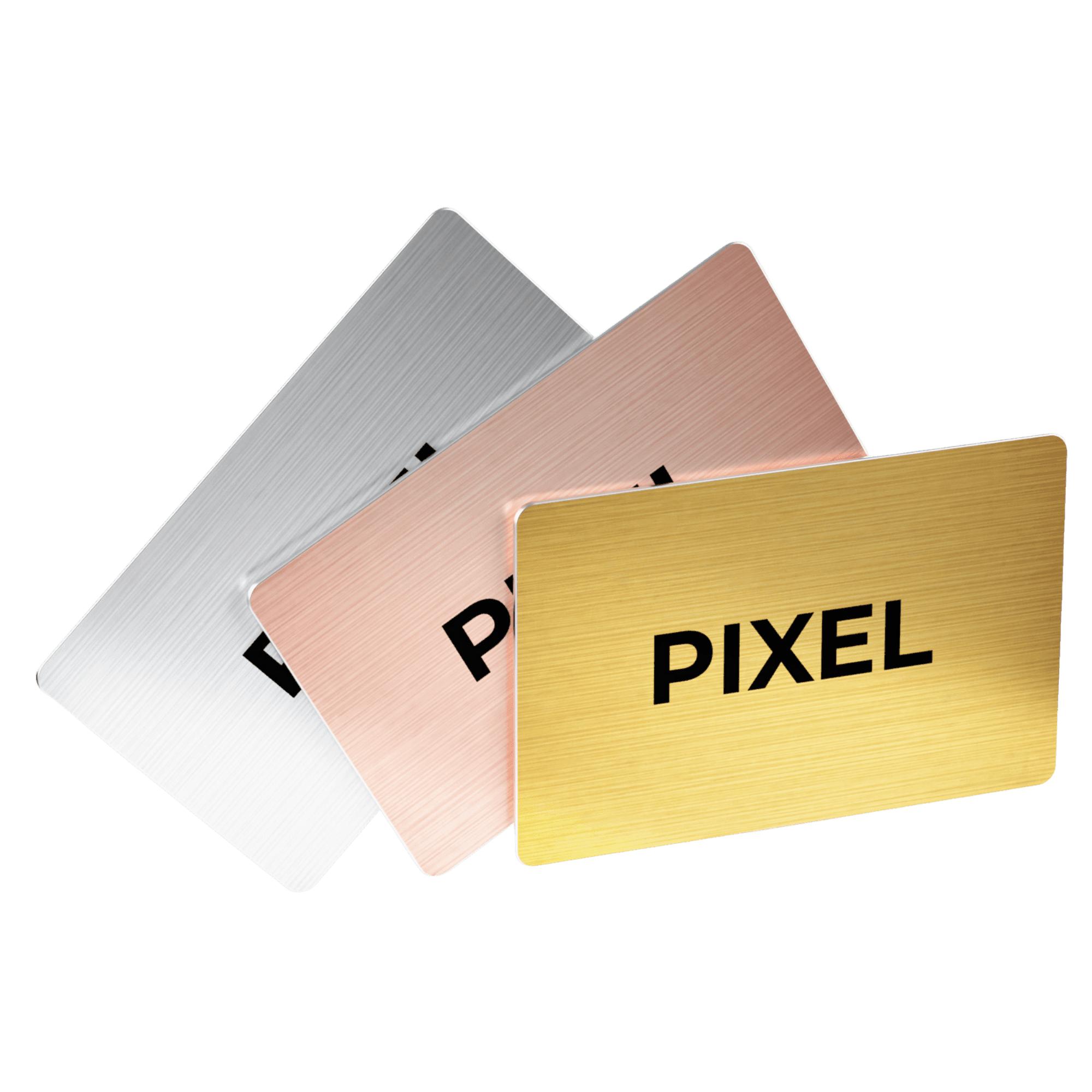
Ask us where lead data is stored before you roll Connect out to your team, so your compliance team can check it against the rules above. PIXEL Original costs SAR 125 per card and PIXEL Metal Edition SAR 235 per card, as a one-time purchase (pixel-nfc.com shop, checked 20 November 2026). Connect is only needed for the people who collect leads. Read more about PIXEL smart business cards for companies in Saudi Arabia.
FAQ
What is the best business card for an insurance agent in Saudi Arabia?
One that clients can save in seconds and that shows who you represent. We recommend a smart NFC card with your name in Arabic and English, +966 mobile, your company and its licence number, plus lead capture if you want prospects’ details back.
Should an insurance agent put the licence number on a business card?
We recommend it. The Insurance Intermediaries Regulation asks agents and brokers to note their licence number on papers, correspondence and documents (Art. 31(a), 34(a)). It doesn’t mention business cards by name, so check your company’s policy.
Who licenses insurance agents and brokers in Saudi Arabia?
The Insurance Authority, which began operating on 23 November 2023 and took over the insurance responsibilities previously held by SAMA. SAMA’s existing insurance rules remain in force until replaced.
Do clients need an app to receive my smart business card?
No. The client’s iPhone or Android phone reads the card by NFC and opens your details, ready to save. They need an internet connection to load them.
Can a smart business card collect a prospect’s details?
Yes, with a lead capture feature. With PIXEL, that’s PIXEL Connect: the card opens your Digital Profile and invites the client to share their details back, saved as a lead.
Where should an insurance team store the leads it collects?
In a controlled system your compliance team approves, not personal phones. Sector rules require confidentiality, restricted access and customer data kept in the Kingdom, so ask every vendor where data is stored.
How many smart business cards does an agent need?
One. You tap it on the client’s phone and keep it, and the same card works at every meeting.
How much does a PIXEL card cost?
PIXEL Original is SAR 125 and PIXEL Metal Edition SAR 235 per card, one-time purchase (shop, checked 20 November 2026). Team orders get a quote.
The verdict
For an insurance agent or broker in Saudi Arabia, the business card does two jobs: it gets you saved, and it shows the client who you are licensed to act for. Make it quick to save, keep it up to date, and show your licence details. If you run an agency, a brokerage or an insurer’s sales team, go one step further: give every rep a smart card, send the leads they collect to a CRM your compliance team approves, and keep client data under control.
Insurance agent or broker? Order your PIXEL card → pixel-nfc.com/en/shop Running an agency, brokerage or insurance sales team? Get a team quote → pixel-nfc.com/en/shop?tab=teams or book a demo → pixel-nfc.com/en/contact
If your team still prints business cards, we can help.
Sources
All checked on 20 November 2026 unless stated; they may have changed since.
- SAMA Rulebook, “Insurance Intermediaries Regulation” (Art. 4 definitions of agent and broker; Art. 8(g) confidentiality; Art. 8(i) nature of the relationship; Art. 31(a) agents: licence number and represented insurer on official papers; Art. 34(a) brokers: licence number on papers; Art. 35 advertising; Art. 49(a) client data storage). No date shown on the page. https://rulebook.sama.gov.sa/en/entiresection/614
- SAMA Rulebook, “Insurance Market Code of Conduct Regulation” (Art. 4–5 scope incl. brokerages and agencies; Art. 17 data protection, customer data kept in the Kingdom; Art. 30(a) disclosure of who the provider acts for). No date shown on the page. https://rulebook.sama.gov.sa/en/entiresection/563
- Insurance Authority, “Apply for Licenses” (licence types, incl. insurance intermediaries: insurance broker, reinsurance broker, insurance agent), page last updated 01/11/2026. https://www.ia.gov.sa/en/regulations-and-licenses/apply-for-licenses
- Saud Alsaab, Rayan Almutawa and Alanoud AlDakhil, “Establishment of the Insurance Authority in the Kingdom of Saudi Arabia”, Clyde & Co, 14 September 2023. https://www.clydeco.com/en/insights/2023/09/establishment-of-the-insurance-authority-in-ksa
- U.S. International Trade Administration, “Saudi Arabia Financial Services: New Insurance Regulatory Body Launched”, 16 January 2024 (IA began operating 23 November 2023). https://www.trade.gov/index.php/market-intelligence/saudi-arabia-financial-services-new-insurance-regulatory-body-launched
- GCC Board Directors Institute, “Saudi Insurance Authority has now become the sole regulator of the insurance sector in KSA”, April 2024 (contacts listed from Al Tamimi & Company). https://gccbdi.org/legal-updates/saudi-insurance-authority-has-now-become-sole-regulator-insurance-sector-ksa
- Sukanya VS, “7 Ways Digital Business Cards Can Boost Your Insurance Sales”, Uniqode, updated 3 December 2025 (vendor blog). https://www.uniqode.com/blog/digital-business-cards-for/insurance-agents
- DLA Piper, “Data Protection Laws of the World: Saudi Arabia”, last modified 11 February 2026 (checked 18 November 2026). https://www.dlapiperdataprotection.com/?t=law&c=SA
- PIXEL product details, client list and prices: pixel-nfc.com (home, features, shop and FAQ pages), checked 20 November 2026.
Table of contents
- Why do insurance agents and brokers in Saudi Arabia still need a business card?
- Short answer
- Who regulates insurance agents and brokers in Saudi Arabia?
- What should an insurance agent’s business card include?
- How do insurance agents use a smart business card day to day?
- How should insurance teams handle the contact details they collect?
- How do agencies and brokerages roll out cards to a whole team?
- How to choose a smart business card as an insurance agent
- Where PIXEL fits
- FAQ
- What is the best business card for an insurance agent in Saudi Arabia?
- Should an insurance agent put the licence number on a business card?
- Who licenses insurance agents and brokers in Saudi Arabia?
- Do clients need an app to receive my smart business card?
- Can a smart business card collect a prospect’s details?
- Where should an insurance team store the leads it collects?
- How many smart business cards does an agent need?
- How much does a PIXEL card cost?
- The verdict
- Sources
One Smart Business Card replaces thousands of paper cards.
Better for your wallet, better for the planet.


One-time purchase · Upgrade to PIXEL Connect anytime


